
Without moving, I'm not here
Subjects discussed: a formative personal experience, Asian-American literature, Geese

When I was in college, something unusual happened to me. Not the unexpected death of my father, an event that roundhouse-kicked my world off its axis, nor the six months I spent living in an off-campus frat house despite not being a member. In my senior year, I was hospitalized for a mysterious viral infection that one-shotted my motor and verbal functions, forcing me to drop out of society for about a month. The doctors didn’t know what had caused my illness, so all they could prescribe was bed rest. As I was staring down the shockingly plausible possibility that I wouldn’t return to campus after winter break was over, and that my life would look very different going forward, I got better, with no relapse in symptoms. And that was that.
In retrospect, it’s hard to believe I was out of commission for only a month because it felt like so much longer. Every day I’d wake up loopy and disoriented, and proceed to spend several hours on the couch watching marathons of Criminal Minds. I couldn’t really walk, so from my prone position I napped whenever the urge overtook me, which was often. I couldn’t really type, so I wasn’t communicating with my friends, which I normally did every day at all hours1. I couldn’t really talk without heavily slurring my words, which I was too prideful to do over the phone, so the only person who ever heard my voice was my mother, and only when she asked me a question. Absent my usual social, educational, and professional responsibilities, the days inched by with no variation, and often I overshoot how long I was out of commission not because I’m trying to steal sickly-person honor but because I completely lost track of time in this invalid state.
Because I recovered completely, and because I was still working through my feelings of grief re: dear old dad, I tried to minimize the whole experience. (“So that happened!”) My friends were curious and empathetic, but we were all in our final days of college, and we moved onto other things pretty quickly. Within a few months, I was way more preoccupied with trying to finish the collected works of Roberto Bolaño, and consummate any lingering crushes before graduation. Only now when I describe the incident to my adult friends, and they react with bewilderment and shock, have I considered anew what a bizarre experience it was—one of the defining events of my life, actually.
One curious thing about the illness is that my mental functions were almost entirely unimpeded, other than the lethargy that comes with lying down for 23.5 hours a day2. If you observed me for five minutes, your takeaway would’ve been “Man, this guy looks and sounds all the way fucked up.” But my inner monologue remained as chatty and perceptive as ever, though mostly what I thought was: “Holy shit, this sucks.” I just couldn’t translate any of what was inside of me. Spoken language came out of my mouth jagged and slow, preventing the nuances of timing and irony that normally made me such a sparkling conversationalist. I’d attempt to bang out a sentence—I was, and am, a natural touch typer—and hit every key but the one I meant. You have no idea how frustrating it was to think “I could really use a beer” and instead type “I viukd trsllu ide a nrrt.” (As I recall, a 447-word email to my friends updating them on the situation took me about a half hour to write, and only because I typed veeeeeeeeeeeery slooooooowly3.)
I’d never understood so intimately how the gap between thought and action that colors plenty of human behavior (and lots of good fiction)—eg. “I wanted to tell Christina that I love her, but I chickened out”—could be a yawning chasm marked off by police tape, barbed wire, and DO NOT PASS GO signs. There was so much I’d taken for granted about being able to move and speak at the speed I wanted. Almost immediately I started to think about the elderly people in my life, or the family members and acquaintances with intellectual disabilities, who seemed to have such difficulties in externalizing what was inside of them. I thought about my friends who were drug addicts, or terminally scatterbrained, or just plain mean. Could it be they contained a hidden oasis of riches inside of them, however inexpressible? I sometimes struggle to write about this, because it seems so convenient to say that I was suddenly imbued with an intense empathy that almost biochemically rewrote my worldview —but, well, yes.
I know how this may sound: “So your big revelation was that other people are real?” Yet this was no small thing, to really sit with that truth. Every day I’m bombarded with evidence about how easy it is to dismiss other people, and their motivations/interests, as fundamentally unreal—especially on the internet. Take Substack, the platform where you’re reading this now. I can’t tell you how many essays I’ve read that hinge on a theory of, “The person I am talking about is fake.” Here’s one example, since I don’t just want to vaguely hand-wave about “stuff on Substack”: This piece in The Republic of Letters where the author explains his issue with a certain lane of weepy, self-absorbed Asian-American fiction. Though the peg was a little shallow4, I’ve also read inarticulate writing on feelings of alienation and love of Caucasians from my countrymen5 and thought, “Give me a break.”
But my issue, when I’ve read those stories or essays, is always with the writing. Never the underlying emotions or ideas, which are real, because they come from real people. Mostly, I’m annoyed the writer wasn’t good enough to pull it off—to cross the gap from “I am telling you something” to “I am leaving you with something.” So what bothered me about this Republic of Letters essay was how it didn’t even engage with the actual text of some of the described books; instead, it used the plot summary to declare the work was bad, inauthentic, etc. The writer basically made up his own interpretation of the books he was criticizing (all by women, fwiw) in order to suggest they reify “this very professional-managerial-class/social-justice idea that racial discrimination is the only crime, the only way that a person can suffer.” That would be a devastating claim to pull out from a group of acclaimed, successful novels by contemporary Asian-Americans—if only the critic had done the work to justify this, rather than dismissing a bunch of strangers as a projection of his own worst suspicions6.
You can really run adrift, interpreting the world like this. Recently, a lot of people refused to believe that a popular band had real fans. The band is called Geese, a group of handsome Brooklynites who play high-energy experimental rock music. I first learned about them in 2021, when they released a record called Projector, but they really popped onto my radar toward the end of 2024, when their frontman Cameron Winter released a super-acclaimed solo album, Heavy Winter, that was ascendantly popular amongst my social circle of plugged-in aesthetes. They put out an even-more-acclaimed record, Getting Killed, in the fall of 2025, and embarked on one of those see-it-to-believe-it sold-out tours where every one of my friends who attended raved and raved about what a lively and memorable time it was. They played Saturday Night Live, and Winter performed solo at Carnegie Hall, which Paul Thomas Anderson filmed for a yet-unreleased documentary or video or whatever. To badly paraphrase Lenin: “There are years where buzz doesn’t happen; and there are weeks where years of buzz happen.”
Then, last month, Geese became the face of undisclosed digital marketing campaigns meant to artificially boost the visibility around a particular artist or group. The gist of it is this: In a thoughtful Substack post by the musician Eliza McLamb, Geese were identified as a client of Chaotic Good Projects, an agency that hires people to post incessantly about a song or live show or what have you, thereby creating an impression that a song is organically popular when, really, some random woman in Tucson was paid a small fee to boost it on her feed. Other, more popular artists like Dua Lipa and Childish Gambino were also named as clients of this firm, but because Geese are an indie rock band, and thus are supposed to be more “authentic,”7 they bore the brunt of criticism after McLamb’s post went viral because this practice may be commonplace across the internet, but certainly seems kind of icky when you spell it out.
Not long after, Wired ran an article on the usage of these campaigns that flat-out called the fanfare around Geese a “psyop” in the headline, which I realize is a provocation but a fairly intense one. What surprised me was how many people chimed in to say: See, I knew it. There’s no way they got popular on their own. As if all of it—the critically-acclaimed records, the sold-out shows, the interest from PTA—was attributable to this astroturfed campaign, not the band’s music. If you read the Wired piece, you might notice that it failed to elucidate what Chaotic Good actually did on Geese’s behalf, so we have no way of knowing how deep their involvement went8. Nonetheless: This explained it all. Geese were a fake band, boosted by fake fans, and clips of their weirder songs began circulating as proof that nobody could really like this atonal bullshit.
I confess the thing irritated me on some egotistical level because I pay attention to contemporary music, and thus I’d followed how Geese had enjoyed the trajectory of many a Pitchfork-approved indie rock band before them. I hate to break it to the conspiracists, but “good-looking guys playing wonky, occasionally poppy guitar music in New York City” has been a recipe for success for several decades. And believe me, the big labels would love if making an artist popular was as easy as paying for some TikToks. The idea that all of the Geese fans, some of whom I know personally, had been tricked into their fandom—well, that was sort of depressingly cynical, these confident assertions that they were too stupid to have formed their feelings sincerely. I’m sure some of those ticket buyers were there to see what the fuss was about, but past a certain point, most people don’t pretend to like a band or song just so they can fit in.
I don’t know—I understand the instinct to think otherwise, but I actually don’t want to live assuming that most people are easily fooled suckers and there’s nothing you can do about it but sit back, say “harrumph,” and celebrate the pyrrhic victory of landing the best seat on the Titanic. It’s bad politics, but it makes you a worse person, not because your views are suddenly toxic but because pessimism and mistrust are spiritually corrosive over time. I do believe this; it’s possibly the root of everything I believe. One of the more moving takeaways from McLamb’s piece, actually, was her attempt to wave off the bad vibes that come with thinking about the numbers for too long, and instead remember that a real connection is made with the people who attend her shows. She still loves “Love Take Miles,” by the way.
The world is a vast, confusing place populated by countlessly emergent phenomena. Every day I’m confronted with evidence that I’ve been left behind not because I’ve stopped paying attention, or because I’m old, but because I am simply myself and there’s too much out there that’s not for me. Stanley Cups, I don’t get that. Doing some novelty dance to “Million Dollar Baby” for your TikTok feed—why? On a surface level, I’m contemptuous of the popularity of BTS, the Sonic the Hedgehog movies, Love Island, Heated Rivalry—because it’s not for me, and I’m a snob, and I wish the world prioritized and rewarded the things I care about.
But people are the prism through which all this stuff, and much more beyond that, becomes real. Those reasons are sometimes locked away in a black box of bespoke logic, but I know they exist, even if I can’t personally connect with them. Is it possible to consider the mystery of another person, and imagine there’s some common ground on which we can both stand? Doesn’t everyone want to be understood, deep down? To be honest, when I read other people’s imperious assumptions in their imperious little posts I often feel like an idiot, or a baby, thinking how I think—but whatever, if that makes me an idiot baby, I can live with it.
I remember lying on that couch, wanting so desperately to make myself legible again. Whether that gap between me and you can actually be bridged, beyond my wishful thinking, is another question—but there’s no doubt that when I stare across that big void, it’s a flesh and blood person who’s looking back. I’d like to hope it’s an act of optimism, and not naïveté, to believe this9.
As a reminder
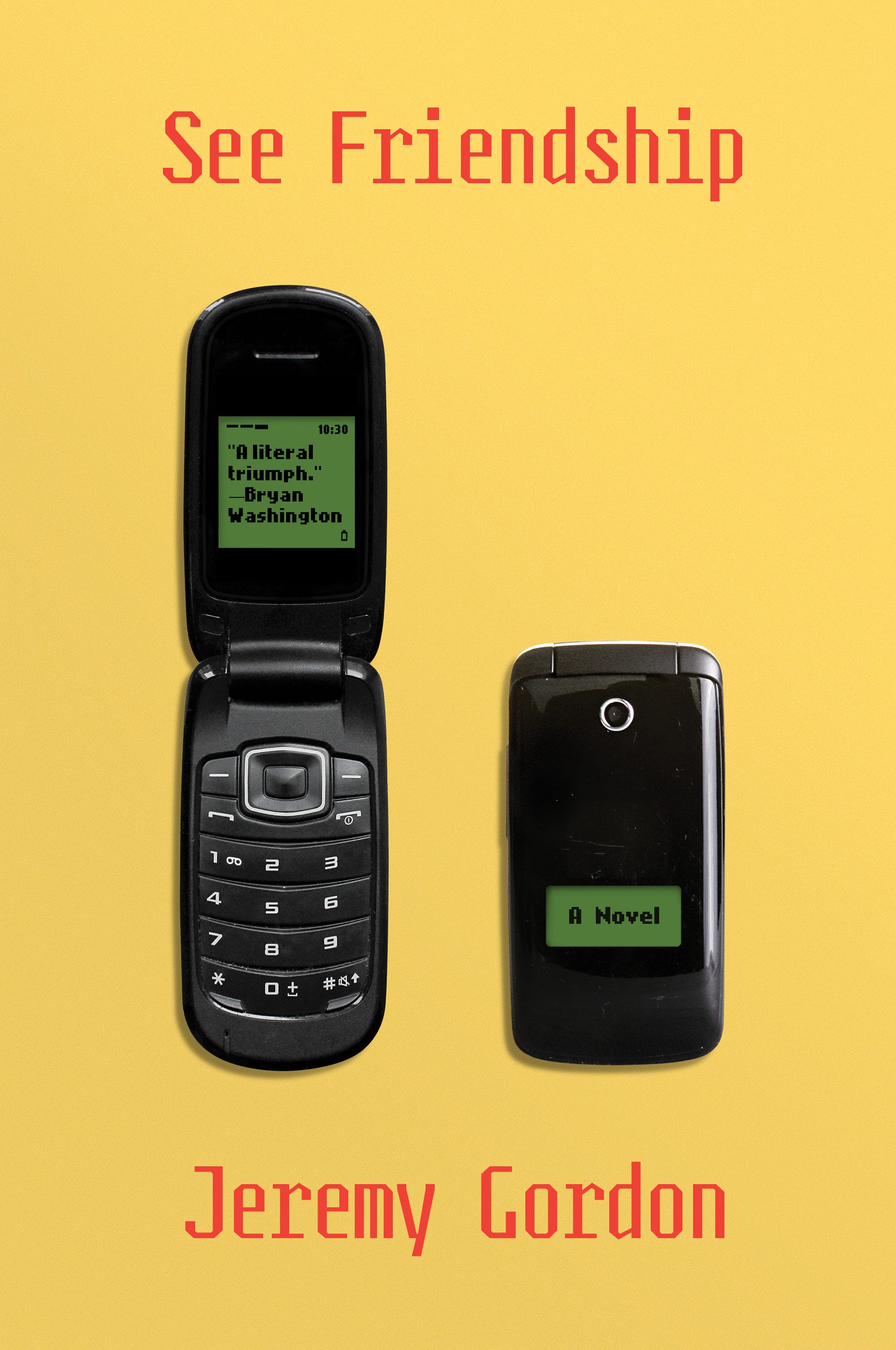
My novel, See Friendship, has been out for a little over a year. I think it’s pretty worthwhile, and people have continued to tell me so, which I deeply appreciate. Recently I did a reading where a woman told me she’d recommended it to like six of her friends, to which I said: “Wow!” I mean, that’s just unbelievably great stuff—made my night. You can purchase it here.
Professionally speaking
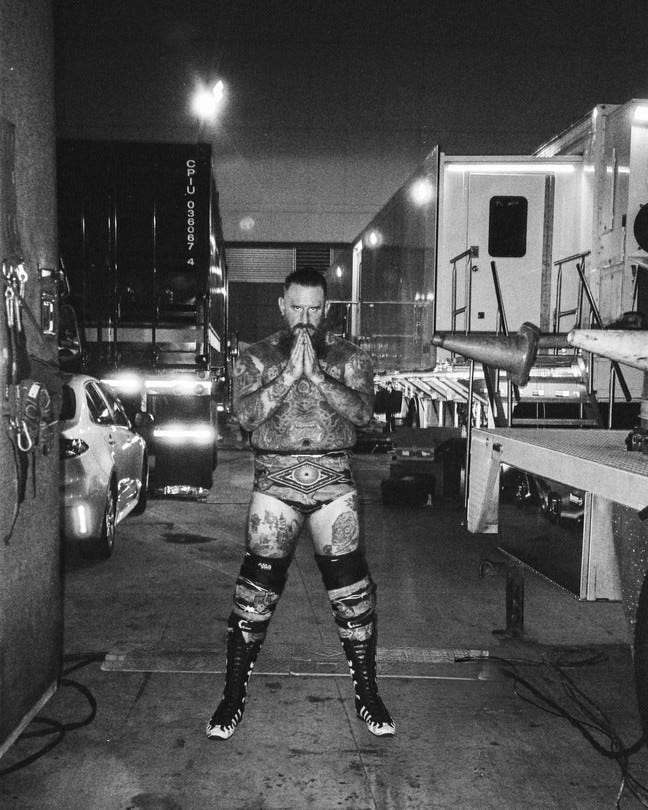
For The Atlantic, I went to St. Paul to report on a pro wrestling show where a wrestler who’s been publicly anti-ICE was set to perform. I wondered what was going to happen, and it ended up being a piece about how people are real, in fact.
My best friend, Matthew, said he first suspected something was wrong when I didn’t log onto AOL Instant Messenger for a day.
To be clear: I could still walk, but my balance was so violently off-kilter that I limited my mobility for when I had to use the bathroom. At the airport, when I was flown home, they had to push me around in a wheelchair.
It’s possible I would’ve developed the discipline to type this slowly with consistency, had my symptoms persisted, but at the time I was just too depressed to give it a go.
Basically: A short story in The Georgia Review penned by a Stegner Fellow went viral, in the wrong way, which led to dozens of bored racists doing a pile-on re: the author’s talents, motivations, etc. It was very stupid, and I think lesser of anyone who was that bothered. Crazy Rich Asians—there was a target big enough for all your messy diaspora feelings.
As a reminder, I’m half-Chinese, not that the people who make AAPI Month displays at your local bookstore seem to care…
You might ask: “But aren’t this guy’s feelings just as real, because he’s real?” The suspicion he articulates—that’s real. But the process used to confirm this is shallowly executed—the same skill issue I’m talking about re: the writing I don’t like.
A topic for another time.
Here I will note that I am a professional editor with assigning power, so instead of just being grumpy online I did try to run down some of the specifics but only got so far because nobody involved really wanted to go on the record. Alas.
“But what about Nazis?” you ask. Fair enough, but for the purpose of this post, let’s grant that I’m not talking about the extreme examples requiring a more tactical approach than “I see you.”
Thanks for anecdote about your bedridden experience - this is gonna super weird, but in early april, I just came off brain surgery (in short, I'm largely gonna well and normal again in a few months if all goes according to plan and it's even getting better a lot already; I hope you can tell from my grammar right now even tho I just said "brain surgery" with alarming quietness). For me, it was 5 weeks or so of a similar experience. I was bedridden as well, and I could listen, make sense of things and respond, but words were are garbled - a type cognitive aphasia, I'm told. Luckily it's getting better, like I said, tho there's some work to go. Anyways, I've always enjoyed your writing, especially this piece, and I hope you keep it up - this was just weird, strange, and even serendipitous one to stumble across, I just had to share.
A brilliant piece. I share your belief; it’s no small thing to pause, behold, and then try to close the gap between the overwhelming mystery of another and ourselves. I’m so glad I found your writing this morning.